
10 Powerful Ways AI in Smartphones Is Transforming Your Daily Life
Artificial intelligence is no longer a futuristic concept—it is already part of your everyday smartphone experience. From smarter cameras to voice assistants, AI in smartphones is transforming how we interact with our devices in ways we never imagined.
What Is AI in Smartphones?
AI in smartphones refers to the use of machine learning and intelligent algorithms to improve performance, enhance user experience, and automate tasks. Modern devices use AI to learn your habits and adapt to your needs.
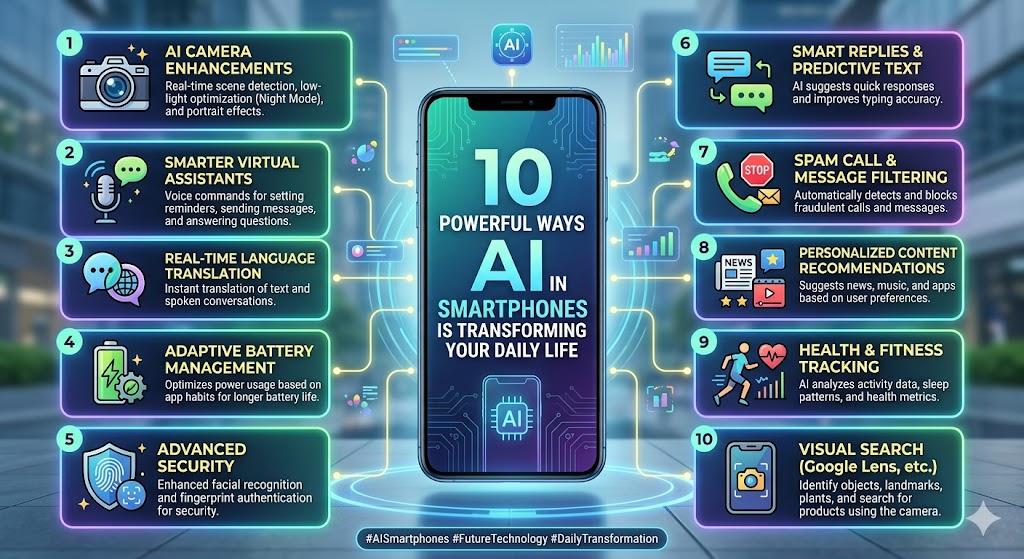
10 Powerful Ways AI Is Changing Smartphones
1. Smarter Photography
AI helps cameras detect scenes, adjust lighting, and enhance image quality automatically. This allows users to capture professional-looking photos without manual adjustments.
2. Voice Assistants
Voice assistants like Siri or Google Assistant use AI to understand commands and perform tasks such as setting reminders or searching the web.
3. Personalized User Experience
AI learns your habits and preferences, suggesting apps, content, and settings tailored to your usage.
4. Improved Battery Management
AI optimizes battery usage by analyzing your behavior and limiting background activity for unused apps.
5. Enhanced Security
Facial recognition and fingerprint sensors use AI to provide secure and fast authentication.
6. Real-Time Translation
AI enables instant translation of text and speech, breaking language barriers.
7. Smart Notifications
AI prioritizes important notifications and reduces distractions from less relevant alerts.
8. Better Performance Optimization
AI helps manage system resources, ensuring smoother performance and faster app launches.
9. Health and Fitness Tracking
AI analyzes data from sensors to provide insights into your health and fitness activities.
10. AI-Powered Apps
Many apps now use AI for features like photo editing, recommendations, and automation.
Benefits of AI in Smartphones
- Improved user experience
- Better performance and efficiency
- Enhanced security
- Time-saving automation
Challenges and Concerns
Despite its benefits, AI also raises concerns about privacy and data security. Users should be aware of how their data is collected and used.
The Future of AI in Smartphones
AI will continue to evolve, bringing even smarter features such as predictive behavior, advanced automation, and deeper integration with other devices.
FAQ: AI in Smartphones
Is AI safe to use on smartphones?
Yes, but users should manage permissions and data privacy settings carefully.
Do all smartphones have AI?
Most modern smartphones include some form of AI features.
Can AI improve phone performance?
Yes, AI helps optimize system resources and improve efficiency.
How AI Learns Your Behavior
One of the most impressive aspects of AI in smartphones is its ability to learn from user behavior. Your phone analyzes how you use apps, when you use them, and what actions you take most frequently. Over time, it builds a pattern that helps optimize your experience.
For example, your phone may automatically suggest apps you often use at certain times of the day. It can also adjust brightness, sound, and notifications based on your habits. This level of personalization makes smartphones feel smarter and more intuitive.
AI in Mobile Photography: Beyond Filters
Modern smartphone cameras rely heavily on AI to produce high-quality images. AI can recognize scenes such as food, landscapes, or portraits and automatically adjust settings like exposure, contrast, and color balance.
In addition, AI improves night photography by combining multiple images to reduce noise and enhance details. This allows users to take professional-looking photos even in low-light conditions.
AI and Battery Optimization
Battery life is one of the biggest concerns for smartphone users. AI helps solve this problem by learning which apps you use frequently and which ones you rarely open.
By limiting background activity for unused apps, AI reduces power consumption and extends battery life. This is one of the most practical benefits of AI in smartphones.
AI in Security and Privacy
Security is another area where AI plays a major role. Features like facial recognition and fingerprint scanning use AI to quickly and accurately identify users.
AI also helps detect unusual activity, such as unauthorized access attempts or suspicious apps. This adds an extra layer of protection for your personal data.
AI-Powered Voice Assistants
Voice assistants have become smarter thanks to AI. They can understand natural language, respond to complex questions, and perform multiple tasks at once.
From setting reminders to controlling smart home devices, AI-powered assistants make everyday tasks more convenient and efficient.
The Role of AI in App Recommendations
AI analyzes your preferences and usage patterns to recommend apps, videos, and content that match your interests. This makes your smartphone experience more engaging and personalized.
Streaming platforms, social media apps, and online stores all use AI to deliver content tailored specifically to you.
Potential Risks of AI in Smartphones
While AI offers many benefits, it also comes with certain risks. One of the main concerns is data privacy. AI systems rely on large amounts of data, which may include personal information.
Users should be aware of how their data is collected and used. Managing permissions and privacy settings is essential when using AI in smartphones.
Future Trends of AI in Smartphones
The future of AI in smartphones looks promising. We can expect more advanced features such as predictive actions, smarter automation, and deeper integration with other devices.
AI may soon be able to anticipate your needs before you even interact with your phone. This will make smartphones more proactive and helpful in daily life.
Why AI Is the Future of Mobile Technology
AI is not just a trend—it is the foundation of future mobile innovation. As technology continues to evolve, AI in smartphones will become even more powerful and essential.
From improving performance to enhancing user experience, AI is transforming smartphones into intelligent companions that adapt to your lifestyle.
Conclusion
Understanding fast charging battery life helps you make better decisions about how you charge your phone. While fast charging may generate more heat, modern technology minimizes its impact.
The rise of AI in smartphones is changing how we use mobile devices every day. From smarter features to personalized experiences, AI is making smartphones more powerful and intuitive than ever before.
As technology continues to advance, AI will play an even bigger role in shaping the future of mobile devices.
